

New Delhi
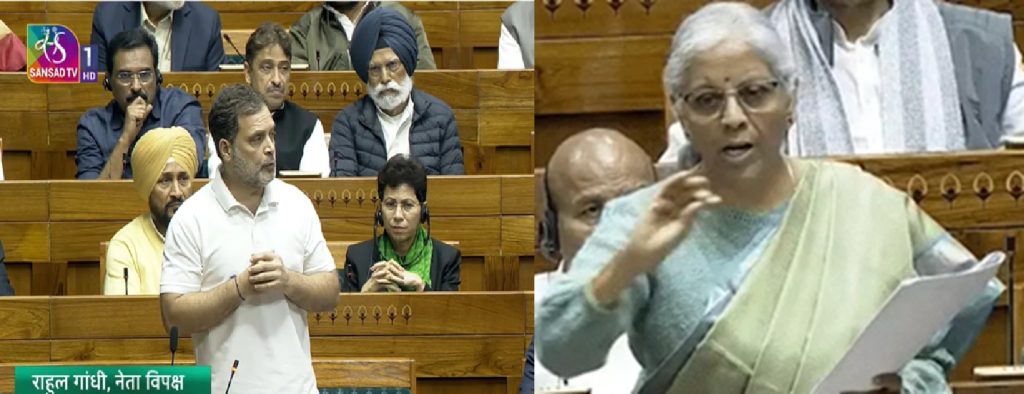
A heated exchange took place in the Lok Sabha on Wednesday during the discussion on the Union Budget, with Leader of Opposition Rahul Gandhi accusing the government of “selling Bharat Mata” through the India–US trade deal. Finance Minister Nirmala Sitharaman strongly rejected the allegations, countering that it was the Congress party that had previously compromised India’s interests in international agreements.
Speaking during the debate, Rahul Gandhi alleged that the government had “completely surrendered” in its trade negotiations with the United States. He claimed that the deal would allow the US to influence India’s decisions, including where the country purchases oil. “America will decide from whom we buy oil. The Prime Minister will not make that decision,” Gandhi said, describing the agreement as a blow to India’s sovereignty.
Responding to the charges, Sitharaman said Congress leaders lacked the capacity to listen to facts. She asserted that it was Congress that had “sold India” by signing the Trade Facilitation Agreement at the WTO meeting in Bali without securing adequate benefits for the country. According to her, the Modi government rectified those issues in 2014 to protect farmers’ rights and ensure food security for the poor.
The debate also saw sharp exchanges over GST and inflation. Refuting claims made by TMC MP Abhishek Banerjee that citizens pay GST “from birth to death,” Sitharaman clarified that essential items such as milk, education, books, and healthcare services are either exempt or have seen GST relief. She added that states have the authority to reduce their share of taxes, pointing out that petrol prices in West Bengal are higher than in Delhi due to state levies.
On allegations regarding inflation, the Finance Minister maintained that price levels are under control and accused the opposition of presenting incorrect data. She urged opposition members, including Rahul Gandhi, to read the Budget documents thoroughly before making claims in Parliament.
Earlier, Gandhi also referred to the Epstein files and a case involving industrialist Gautam Adani in the United States, alleging that the case was a way to pressure Prime Minister Narendra Modi. Parliamentary Affairs Minister Kiren Rijiju demanded that Gandhi substantiate his claims, warning that a privilege motion could be moved against him.
The discussion reflected deep political divisions as the government defended its economic policies and the opposition questioned the impact of international trade agreements and domestic taxation measures on India’s sovereignty and citizens.
About Author

You may also like
Virat Kohli Scripts Another Major Record, Becomes First Batter in the World to Achieve This Milestone
Lata Mangeshkar Remembered on Her 97th Birth Anniversary; Sudarshan Institute Students Create Special Sand Art
Setu Bandhasana Helps Calm the Mind and Strengthen the Spine; Know the Right Way to Practise It
How to Understand Your Hemoglobin Report: It’s Not Just a Number, but an Important Indicator of Health
Fiber-Rich Meals Can Help Keep You Fit; Know How Much You Need Daily