

Introduction: A Strategic Shift in South Asia
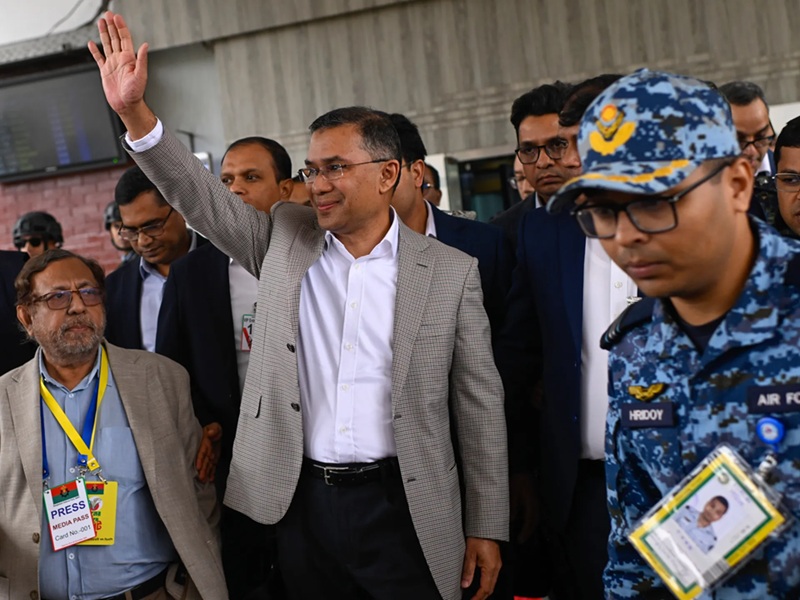
The election results in Bangladesh are not merely a change of government but potentially a major strategic shift in South Asian geopolitics. With Tarique Rahman leading the Bangladesh Nationalist Party (BNP) to a sweeping victory, Dhaka now has leadership that historically sent tough diplomatic signals to New Delhi.
After 17 years in exile, Tarique has returned to lead a country navigating between Chinese economic influence and ideological proximity to Pakistan. The end of Sheikh Hasina’s “India-first” era marks a new and uncertain chapter.
1. Diplomatic Mask vs Ground Reality: The Illusion of “Neither Delhi nor Pindi”
Tarique Rahman’s campaign slogan — “Friend Yes, Master No” and “Neither Delhi nor Pindi” — sounds balanced on the surface. However, deeper analysis suggests complexities:
The Optics:
Tarique presents himself as a modern policy-driven leader appealing to youth and the middle class.
This positioning may help secure international legitimacy, especially from Western powers.
The Ground Reality:
The BNP’s traditional core base has historically been skeptical, if not hostile, toward India.
Coalition partner Jamaat-e-Islami, reportedly holding significant parliamentary strength, could push policies in a more hardline direction.
Any tolerance of anti-India elements would trigger serious security concerns for New Delhi.
Assessment: The first 6–12 months of Tarique’s tenure will reveal whether rhetoric translates into pragmatic diplomacy or strategic distancing from India.
2. China’s “Soft Expansion” and India’s Encirclement Concerns
Bangladesh is increasingly viewed as a critical node in China’s regional outreach strategy.
Economic Leverage: With over $21 billion in bilateral trade and involvement in major infrastructure projects such as river and port developments, Beijing’s footprint in Bangladesh has expanded significantly.
Strategic Geography: India’s vulnerable Siliguri Corridor — often referred to as the “Chicken’s Neck” — connects mainland India to its northeastern states. Any strategic alignment between Dhaka and Beijing heightens Indian security anxieties.
During the interim government period, China reportedly gained expanded economic space. There is little indication that a Tarique-led administration would drastically curtail Chinese investments, especially given Bangladesh’s economic challenges.
3. The “Chicken’s Neck” and India’s Northeast: A Sensitive Fault Line
The most critical concern for India lies in the security of its seven northeastern states.
Diplomatic Pressure Tactics: Past rhetoric about the “Seven Sisters” has been perceived in India as strategic signaling rather than mere political posturing.
Security Risks: Any rise in cross-border infiltration or quiet backing of extremist groups would compel India to divert resources toward border stabilization, potentially impacting its broader global ambitions.
For India, intelligence cooperation and strict border management will become immediate priorities.
4. Tarique Rahman’s Existential Challenge: Rewriting His Legacy
Tarique Rahman faces the formidable task of redefining his political legacy.
Historical memory remains significant: during the 2001–2006 BNP tenure, India-Bangladesh relations were widely regarded as being at their lowest point.
Tarique is aware that repeating that trajectory could invite severe economic and diplomatic consequences. Bangladesh’s fragile economy cannot withstand prolonged tension with a major neighbor like India, especially if trade barriers or economic restrictions emerge.
5. Constitutional Reforms: Safeguard for Democracy or Political Theater?
Despite congratulatory messages from Indian leadership, New Delhi will closely monitor constitutional changes in Bangladesh.
Two-Term Limit: Intended to prevent prolonged dominance like that of Sheikh Hasina, but questions remain whether it will genuinely institutionalize democratic accountability.
Caretaker Government Mechanism: While designed to ensure fair elections, it could also create phases of instability, potentially enabling hardline forces to gain influence.
Conclusion: Time for “Security-First Diplomacy”
India may need to recalibrate its “Neighborhood First” policy into a more security-focused framework.
New Delhi’s message to Dhaka is likely to be clear: cooperation will be conditional. Issues such as the Teesta water-sharing agreement and trade concessions may hinge on Bangladesh’s firm action against anti-India activities and external interference.
Aggressive Take: Tarique Rahman’s victory may be a strategic “check” for India — but it is not yet “checkmate.” The coming months will determine whether South Asia witnesses competitive coexistence or renewed confrontation.
About Author

You may also like
FIFA World Cup 2026 : Canada Reaches the Round of 16 for the First Time, While Lionel Messi and Harry Kane Create New Records
FIFA World Cup 2026 : Ronaldo Creates History as Portugal Thrash Uzbekistan 5-0, Becomes First Player to Score in Six World Cups
Wedding Festivities Begin! Maheep Kapoor Shares Glimpses from Anshula Kapoor and Rohan Thakkar’s Pre-Wedding Celebrations
Sara Ali Khan Shares Special Theatre Moment With Sharmila Tagore and Amrita Singh, Calls Them My OG Legends
Sanjay Dutt Surprises Daughter Trishala Dutt in New York on Father’s Day, Celebrates Special Weekend Together