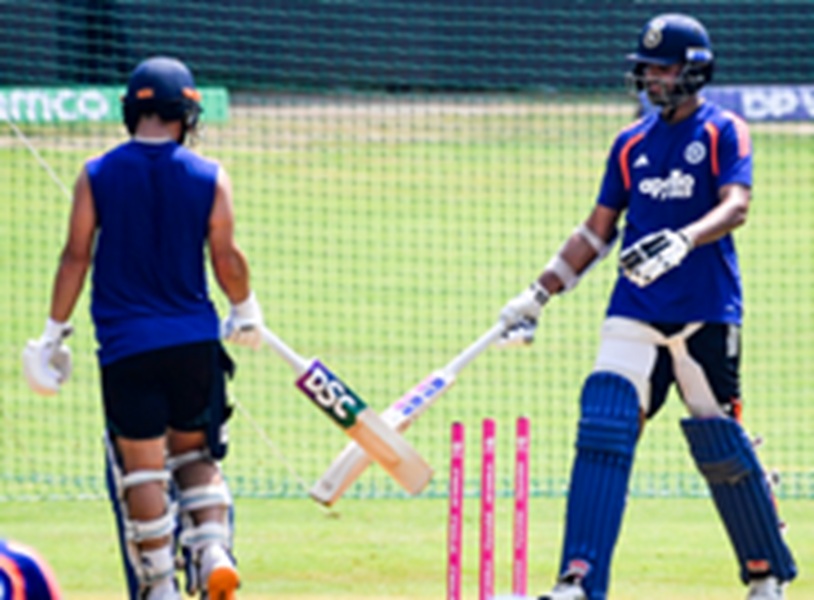

Mumbai: The second semifinal of the T20 World Cup 2026 between India and England at the Wankhede Stadium is not just another knockout match; it is a tactical and psychological battle between two of the strongest teams in modern T20 cricket. With both teams showing consistency throughout the tournament, the outcome will likely depend on key moments, tactical decisions, and individual brilliance.
India’s Performance and Tactical Outlook
India have displayed resilience during the tournament despite inconsistent performances from their top-order batting lineup. The team has relied heavily on different players stepping up in crucial moments rather than consistent dominance from the top three. For example, Sanju Samson’s impactful innings against West Indies demonstrated how India’s middle order can rescue the team under pressure.
However, this strategy carries a certain risk. In high-pressure knockout games, teams generally rely on their top order to provide a solid foundation. Players like Abhishek Sharma, Ishan Kishan, and Suryakumar Yadav will need to deliver a strong start against England’s disciplined bowling attack.
India’s middle order remains one of its biggest strengths. Hardik Pandya, Shivam Dube, and Tilak Varma provide both stability and explosive finishing capability. If India manage to maintain wickets in the powerplay, their middle-order hitters could put significant pressure on England.
Another concern for India is spin bowling. Varun Chakaravarthy, who was expected to be a key weapon in the middle overs, has struggled to maintain his effectiveness in the last two matches. Improving spin control and tightening fielding will be critical for India to prevent England from accelerating in the middle overs.
England’s Strategy and Strengths
England’s campaign has followed a different trajectory. After a narrow victory over Nepal at the start of the tournament, the team gradually found rhythm and became one of the most consistent sides in the Super-8 stage.
England’s biggest concern heading into the semifinal is the performance of their opening pair, Phil Salt and Jos Buttler. Both are known for aggressive starts, but inconsistency at the top has placed additional pressure on the middle order.
Fortunately for England, players like Harry Brook and Will Jacks have provided stability and momentum in the middle overs. Their ability to rotate strike and accelerate when needed has been a major factor in England’s success in the tournament.
England also possess a balanced bowling attack capable of adapting to different match situations. Their pace bowlers can exploit early swing conditions, while their spin options help control scoring during the middle overs.
Historical Context and Psychological Edge
This semifinal adds another chapter to the growing rivalry between India and England in T20 World Cups. This will be the third consecutive T20 World Cup semifinal featuring these two teams. England won the 2022 semifinal, while India responded by winning the 2024 encounter.
Interestingly, in both previous instances, the team that won the semifinal went on to win the tournament, which adds an extra psychological layer to the contest.
Head-to-head statistics also slightly favor India. Out of 29 T20 matches, India have won 17, while England have won 12. While historical numbers do not determine the outcome of a knockout match, they can influence confidence levels.
Pitch Conditions and Match Dynamics
The Wankhede Stadium pitch traditionally favors batsmen, offering good bounce and pace that allow stroke-makers to play freely. High-scoring games are common at this venue, meaning the toss could play a crucial role.
Teams often prefer chasing at Wankhede because of the dew factor during night matches. If dew becomes significant in the second innings, bowlers may struggle to grip the ball, giving an advantage to the chasing team.
Therefore, the team winning the toss may opt to bowl first and chase under more favorable conditions.
Key Deciding Factors
Several elements could determine the outcome of the semifinal:
Powerplay performance: Strong starts from openers could set the tone for the entire innings.
Middle-over control: Effective spin bowling and strike rotation will shape the scoring momentum.
Death-over execution: Teams with better finishing ability and disciplined death bowling will hold the advantage.
Handling pressure: Knockout games often reward teams that manage pressure and seize key moments.
Final Analytical Outlook
Both India and England possess match-winners capable of changing the game within a few overs. India may rely on their batting depth and home crowd support, while England’s strength lies in their balanced lineup and tactical adaptability.
Ultimately, the semifinal at Wankhede is expected to be a high-intensity contest where small tactical decisions—field placements, bowling changes, and powerplay strategy—could determine which team secures the coveted place in the T20 World Cup 2026 final.
About Author

You may also like
Behind the Glitz : The Struggle of Bodies, Jewels and Lives in the Marketplace of Glamour
एशियाड के मैदान पर तिरंगे का स्वर्णिम परचम: भारत ने फाइनल में पाकिस्तान को 19 रनों से रौंदकर लगातार दूसरी बार जीता गोल्ड, अभिषेक और तिलक की आतिशी पारियों ने ढाया कहर
Asian Games 2026: India in 5th Place in Medal Table, China Maintains Dominance; Men’s Hockey Team to Face Malaysia Today
Jai Shri Ram Slogans Raised During CJP Protest at Mumbai’s Shivaji Park; Police Bring Situation Under Control
Five Years of Royal Revelry on the Chest of Udai Sagar