
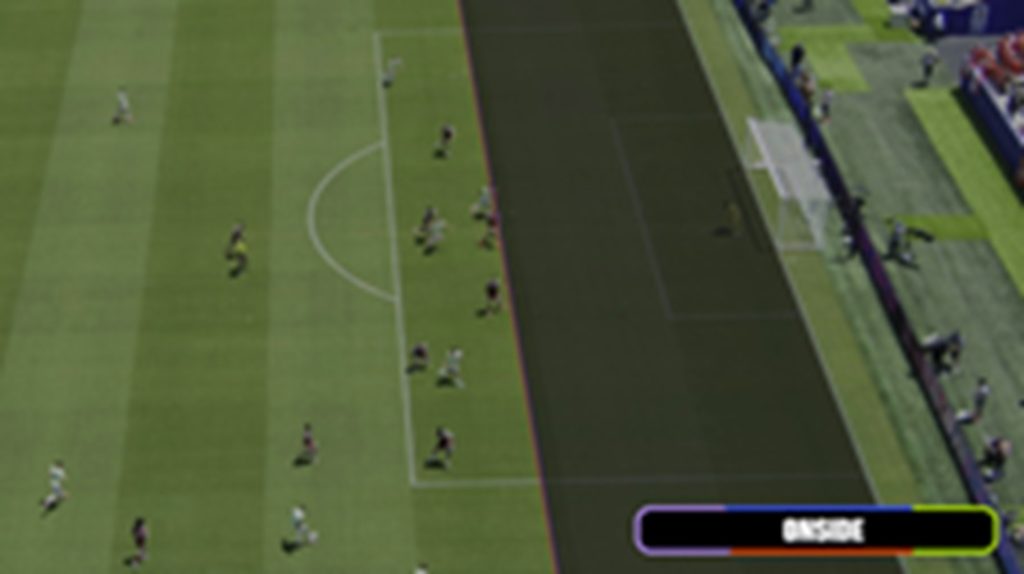
Santa Clara: FIFA has issued an official clarification regarding a VAR (Video Assistant Referee) controversy that emerged during the FIFA World Cup 2026 match between Switzerland and Qatar. The governing body stated that a minor technical issue prevented the broadcast of the semi-automated offside animation graphic, but emphasized that the malfunction had no impact on the VAR review process or the referee’s final decision.
The incident occurred in the 14th minute of the match when Qatar goalkeeper Mahmoud Abunada fouled Swiss midfielder Remo Freuler inside the penalty area, resulting in a penalty being awarded to Switzerland.
However, video replays appeared to suggest that Freuler might have been in an offside position before the foul occurred. The situation was reviewed by the VAR team, which ultimately upheld the on-field decision and confirmed the penalty.
The controversy arose because the semi-automated offside technology graphic, which is usually shown on television broadcasts to illustrate VAR decisions, was not displayed during the review. As a result, many viewers and football analysts questioned the transparency of the decision-making process.
The absence of the graphic quickly sparked debate on social media, with several football experts criticizing FIFA. Former England international and television pundit Gary Neville was among those who expressed concern, arguing that visuals related to controversial decisions should be made public to maintain transparency and help viewers understand the ruling.
Responding to the criticism, FIFA stated that a minor technical malfunction prevented the creation of the onside animation graphic before Switzerland’s penalty was awarded.
“A small technical issue prevented the generation of the onside animation graphic during the review that preceded Switzerland’s penalty in the 14th minute. The issue was resolved quickly. It had no impact on the VAR workflow, and the standard review process was followed in assessing the on-field decision,” FIFA said in a statement.
In a separate media release, FIFA explained that the VAR officials used calibrated review lines to assess the positions of the players involved. According to the review, neither of the relevant attacking positions showed the Swiss player in an offside position immediately before the penalty incident.
The match ultimately ended in a 1-1 draw, allowing Qatar to secure its first point on foreign soil in the tournament.
Despite FIFA’s explanation, the incident has once again highlighted the growing scrutiny surrounding VAR technology and the importance of transparency in modern football officiating.
About Author

You may also like
Udaipur Municipal Corporation Election – Ward 75: Aravalli’s Sun, a Courtyard of 36 Communities and 14 Years in Political Exile
Udaipur’s Political Test: Pramod Samar’s Patience, Simplicity and Vision for Ward 51
Comeback of Anil Singhal
FIFA World Cup 2026 : Canada Reaches the Round of 16 for the First Time, While Lionel Messi and Harry Kane Create New Records
FIFA World Cup 2026 : Ronaldo Creates History as Portugal Thrash Uzbekistan 5-0, Becomes First Player to Score in Six World Cups