
Mumbai
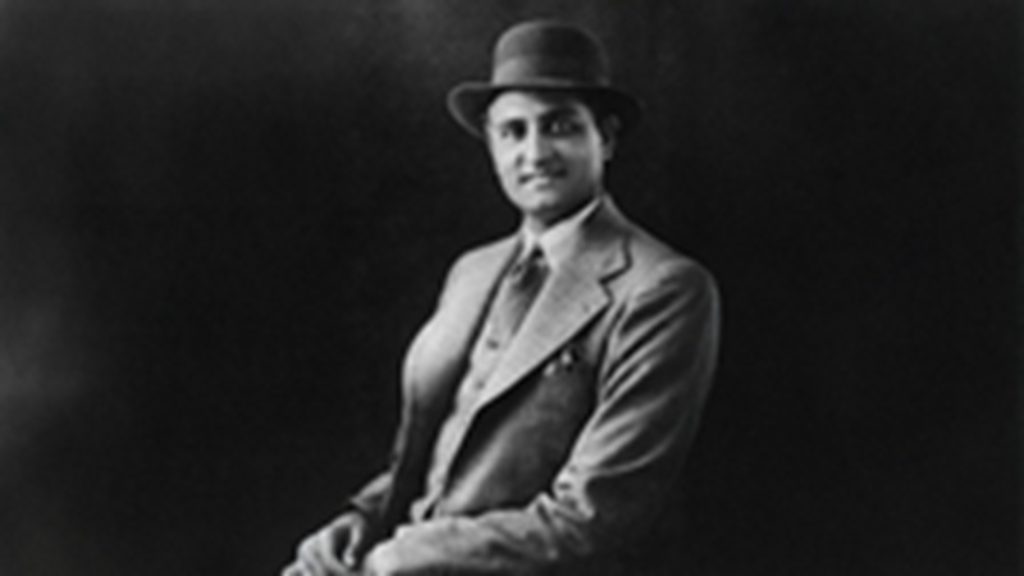
The Indian film industry has seen many stars whose names instantly evoke memories of iconic films and songs. Among them stands Kundan Lal Saigal, popularly known as K. L. Saigal, widely regarded as the first superstar of Indian cinema.
Starting his journey with small jobs, Saigal enriched Indian cinema with his unique voice and compelling अभिनय. Through the film Devdas, he not only immortalized a character but also established himself as a phenomenon whose name alone could make films successful. His legacy of struggle, dedication, and music continues to inspire generations.
Born on April 11, 1904, in Jammu, Saigal is remembered not just for his acting but also for his extraordinary singing. It is often said that films featuring him would turn into major hits purely on the strength of his popularity. He is also credited with laying the foundation of melody-driven music in Indian cinema.
Though his father was a tehsildar, there was no formal musical lineage in the family. His mother, Kesar Bai, played a crucial role in nurturing his early interest in music through devotional songs. Without formal training under a renowned गुरु, Saigal honed his craft by singing at Sufi shrines and local Ramleela performances.
Before entering films, Saigal’s life was marked by struggle. He left school early and worked as a railway timekeeper, later becoming a salesman for a typewriter company, which allowed him to travel across India. During this time, he absorbed diverse languages, cultures, and folk music traditions. He also worked briefly in a hotel. Despite these challenges, his passion for singing remained unwavering.
The 1930s marked the era of talkies in Indian cinema. Saigal moved to Kolkata, where B. N. Sircar of New Theatres recognized his unique voice. Initially performing under the name “Saigal Kashmiri,” he gained nationwide fame with Devdas (1935), based on the novel by Sarat Chandra Chattopadhyay. His performance and soulful renditions of songs like “Balam Aaye Baso More Man Mein” and “Dukh Ke Ab Din Beetat Nahin” captivated audiences across the country, leading to a surge in gramophone record sales.
Saigal’s voice was distinguished by a unique nasal tone that added emotional depth to his singing. Even legendary classical maestro Faiyaz Khan admired his artistry. He also revived the ghazals of Mirza Ghalib, with renditions like “Nuktacheen Hai Gham-e-Dil” and “Aah Ko Chahiye Ek Umar Asar Hone Tak” still resonating with listeners today.
However, Saigal struggled with alcohol addiction, which became a significant part of his life. He often requested alcohol—referred to as “Kaali Paanch”—before recordings. Music director Naushad, during the making of the film Shahjehan, persuaded him to record “Jab Dil Hi Toot Gaya” without alcohol. After the recording, Saigal himself admitted that his voice sounded clearer and more emotionally powerful without intoxication.
Unfortunately, this realization came too late. His addiction severely affected his liver, and at the age of just 42, Saigal passed away on January 18, 1947, in Jalandhar.
Saigal’s influence extended to future generations. Legendary singer Lata Mangeshkar regarded him as her mentor, while Kishore Kumar refused to remake his songs out of deep respect. Today, the K. L. Saigal Memorial Hall in Jalandhar stands as a tribute to his enduring legacy.
About Author

You may also like
जिंक, ज़मीन और जन-कल्याण: कैसे हिंदुस्तान जिंक का स्वास्थ्य मॉडल खनन की पुरानी परिभाषा बदल रहा है
Behind the Glitz : The Struggle of Bodies, Jewels and Lives in the Marketplace of Glamour
हिंदुस्तान जिंक का वित्तीय चमत्कार—कम लागत और जिंसों के बूम का अनूठा संगम
तकनीक जब इंसान की सहूलियत बने: हिंदुस्तान जिंक और उबर का यह साझा कदम भारतीय कॉर्पोरेट जगत के लिए एक नजीर
उदयपुर : हिंदुस्तान जिंक के सामाजिक प्रयासों से 20 लाख से अधिक बालिकाओं और महिलाओं के सपनों को मिली नई उड़ान